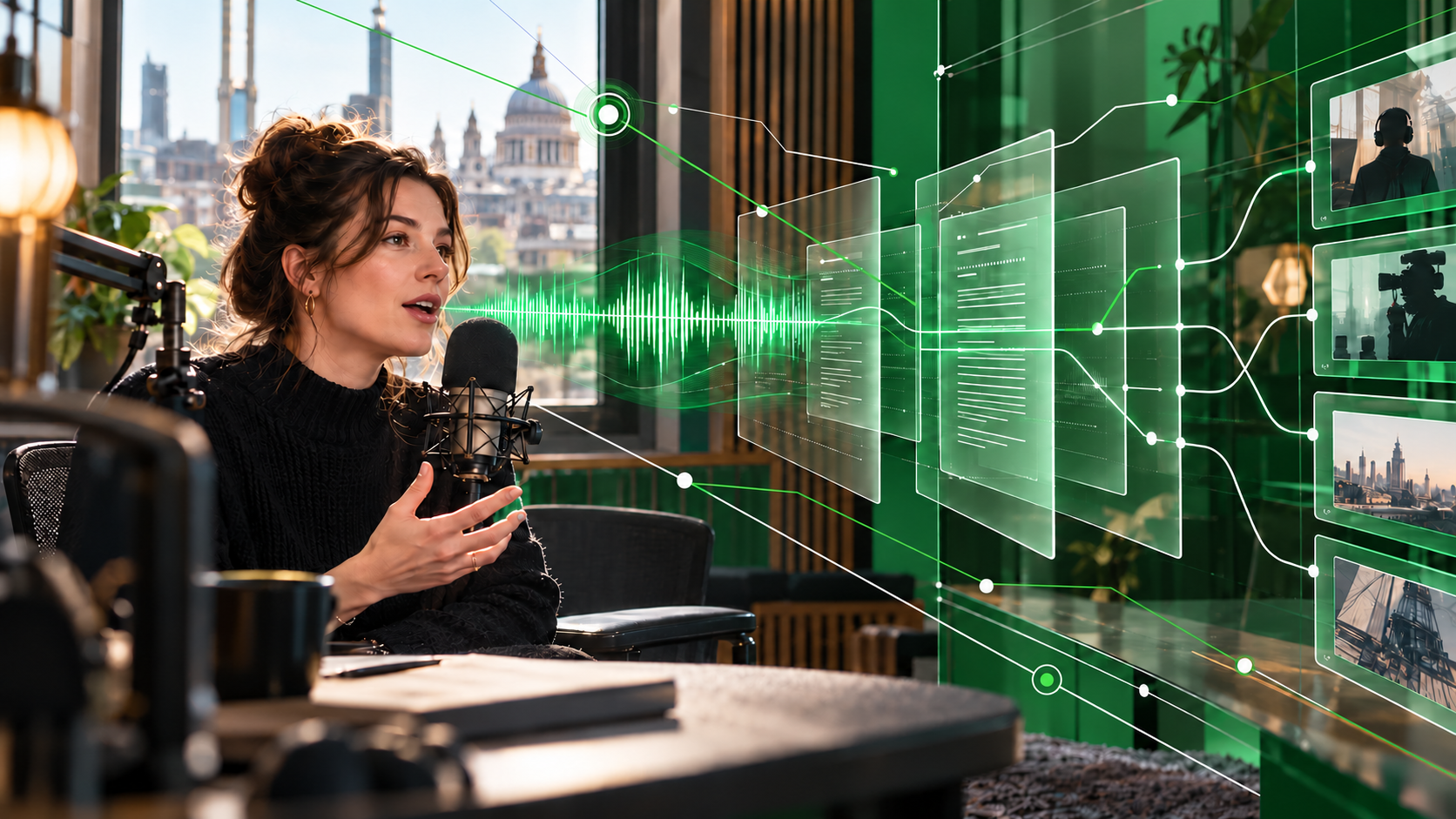
A voice used to be something you could perform with. Increasingly, it is something a customer can licence, replicate and deploy after you have left the studio.
That shift has obvious appeal. A narrator could reach a new language market without recording every line again. A small publisher could create audio editions more affordably. An actor could be paid for authorised uses of a distinctive voice beyond the hours they can physically work. And accessibility tools could help people communicate in ways that feel like their own.
But the commercial prize depends on a question that sounds deceptively simple: when a synthetic voice earns money, what exactly did its human source agree to?
The UK government addressed this directly in its March 2026 report on copyright and artificial intelligence. It recognised both the commercial possibilities and the harms of digital replicas. Crucially, it said there is no specific UK intellectual-property protection for digital replicas as such, although existing laws can apply in particular circumstances. That is not the same as saying voices can be used freely.
A new royalty market is already being built
Voice technology companies are not waiting for a perfect legal framework. ElevenLabs, for example, offers a Voice Library programme in which users can share a verified professional voice clone and receive rewards when paying customers generate audio with it. Its documentation says creators can control sharing arrangements and add moderation protections for categories of use.
That is important because it changes the commercial model. Traditional voice work generally pays for a recording, a session or specific usage rights. A reusable AI voice may be invoked repeatedly, across numerous customer projects, over a long period. A system that tracks usage and distributes compensation begins to resemble a royalty infrastructure business.
Yet a platform payout is not automatically a fair deal. The rate, eligible uses, contract duration, withdrawal period and degree of reporting determine whether this becomes a sustainable new income stream or a cheap substitute for the people who supplied the original skill.
Those details will matter to voice actors, podcasters, audiobook narrators, teachers, creators and, eventually, ordinary workers whose speech is captured by workplace systems.
Consent has to be more specific than a single tick box
For useful voice licensing, there are at least four questions a contract should answer clearly.
First, what uses are authorised? A performer may welcome an audiobook but reject political advertising, explicit material or a product endorsement. Second, where and for how long can the model be used? A one-year UK campaign is not the same as unrestricted global access.
Third, what evidence will the performer receive? Usage logs, customer identity where appropriate, reporting intervals and audit rights become more meaningful than reassuring marketing language. Fourth, what happens after a licence ends? Deleting a model from a catalogue may not recall every audio file already generated and distributed.
These are commercial design questions, not settled universal legal requirements. Contracts, platform capabilities and applicable law vary. But without answers, even an apparently generous fee may represent a very wide transfer of future value.
The case for protection is not theoretical
In June, performers’ union Equity said it had asked Fish Audio to remove allegedly unauthorised cloned voices after receiving complaints from members. The union also sought information about how recordings and associated personal information had been processed and commercialised. Those are Equity’s allegations and requests, not a court finding against the platform.
The government has acknowledged that the present collection of copyright, data-protection, privacy and other protections may not cover every case. It has proposed exploring additional safeguards, including commercial rights relating to a person’s likeness, rather than announcing that a broad new voice-ownership right is already in force.
Privacy rules also require precision. The Information Commissioner’s Office says biometric data used to identify someone uniquely can be special-category personal data; not every audio recording or synthetic voice automatically meets that definition. Organisations need to assess the actual processing and purpose, not assume that a single legal label solves the issue.
The next creative businesses may manage permissions, not just content
One opportunity sits between creators and model providers: permission infrastructure. Imagine a reusable record showing who owns or controls the relevant rights, which campaigns are approved, what territories are covered, how generated outputs are labelled and how usage fees flow back to the performer.
That layer could reduce friction for legitimate producers while making unauthorised imitation easier to challenge. It might also allow emerging talent, not only celebrities, to license work on clear terms.
But portability is an unresolved issue. If a creator builds a lucrative voice identity on one platform, can it be transferred to another? Can users audit the hours generated? Do protections survive a change in platform ownership? The answers will influence who captures the value in this market.
What creators should do now
Before agreeing to a voice-cloning project, ask for written details of scope, duration, territories, permitted customers, payment mechanics, moderation, model security, termination and treatment of already-generated audio. Treat any promise of perpetual passive income cautiously. Consider specialist legal advice where the stakes justify it.
AI can turn a voice into a repeatable commercial service. The more important innovation may be a trustworthy way of asking permission, proving usage and paying the person whose identity makes that service worth buying.
Sources and verification notes
- City A.M., 13 October 2026: originating discussion of voice-cloning rights and the creative industries.
- UK government, 18 March 2026, Section J: primary analysis of digital replicas and current legal gaps; government is exploring reform, not presenting a new enacted blanket right.
- ElevenLabs Voice Actor Payouts and voice-sharing documentation: platform’s published model for monetisation and access.
- Equity, 3 June 2026: union’s primary account of its complaints and requests.
- ICO biometric-data guidance: confirms identification-purpose distinction for special-category biometric information.
- Editorial distinction: Contract recommendations are practical commentary, not legal advice; Equity’s allegations are not judicial findings; platform payouts should not be confused with statutory royalties.